Why is the price on the shelves for drinks often different from what I actually pay in supermarkets in Germany?

- By
- Aparna Patel
- |
- 28 Jun, 2025
- |
266👍
When purchasing a drink, you are also paying for a deposit for the bottle. The deposit amount should be listed on the shelves, typically in small print. Look for something similar to "zzgl. 0,15 Pfand". It's important to note that the prices displayed on supermarket shelves already include VAT.
Deposits apply to many drink containers, but not all, and the regulations surrounding this can be quite complex. They are applied to both non-reusable and reusable containers to discourage littering and ensure that reusable containers are not economically disadvantaged. Deposit amounts can range from 8 ct to 25 ct.
You can reclaim your deposit, even at a different store from where you made the purchase, as long as they sell the same bottles. Many larger supermarkets have machines that can scan the bottles and provide a receipt which can then be redeemed at the cash register. It's worth noting that you can reclaim the deposit without having to make an additional purchase.
It's a common practice for most Germans to return their empty bottles and claim the deposit. If you choose not to do so, it is considered polite to place the bottle next to a public waste bin instead of inside it. Some individuals may collect these bottles to reclaim the deposit as a means of earning a small amount of money.
44👍
In Germany, supermarket prices always include VAT. Any additional cost you may have noticed is actually a "Pfand," which is essentially a deposit for the bottle. This deposit is for bottles that can be reused or recycled. You can return the empty bottle to the supermarket and receive your Pfand deposit back.
25👍
Here's the logo found on recyclable bottles and cans that require a deposit (usually €0.25):
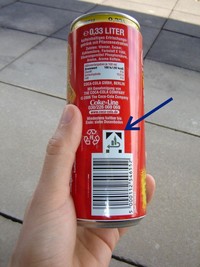
Based on your purchase price of €0.15, the juice you bought was in a refillable bottle of 0.5L or larger.
If you prefer not to pay the deposit when buying your drink, be sure to choose single-use bottles or cans (such as PET bottles, aluminum cans, or Tetra-packs) that do not feature this icon.